

21 Jun 2026
- 12 Comments
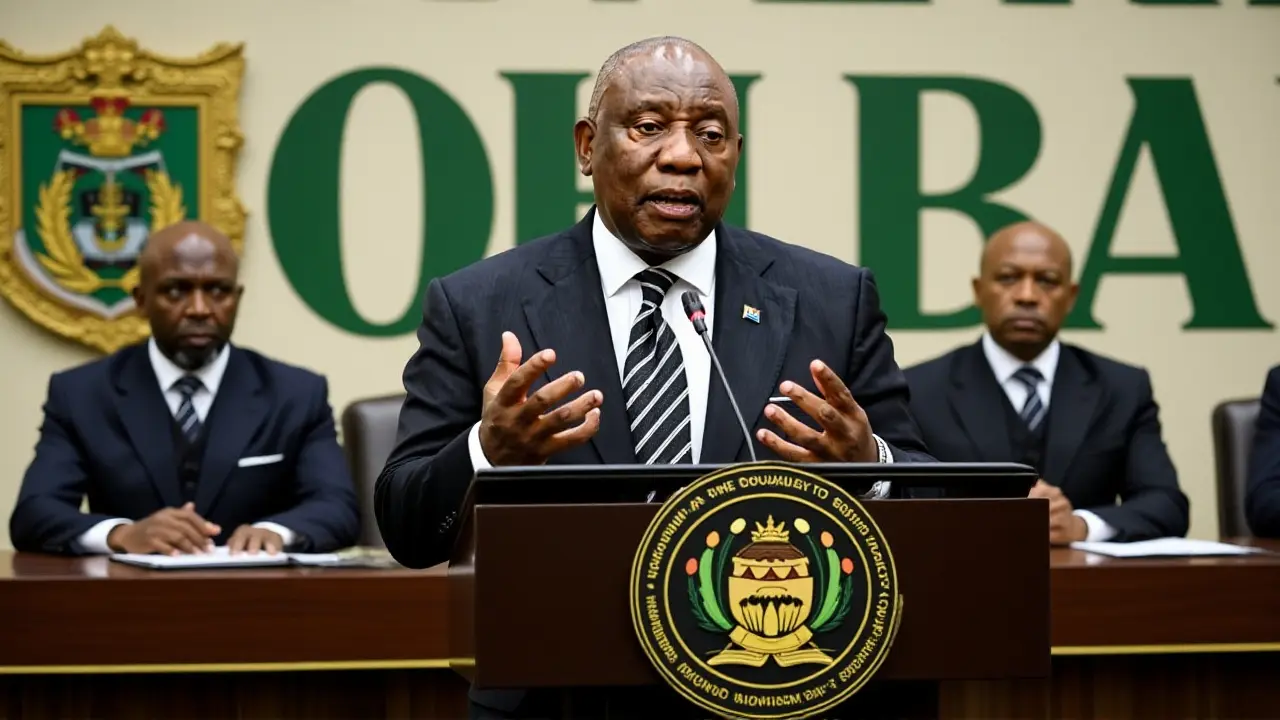
It’s shaping up to be a constitutional showdown in Cape Town. On Thursday, 18 June 2026, the Impeachment Committee on the Section 89 Enquiry made its stance clear: it will fight back. The 31-member panel voted overwhelmingly to oppose an urgent court application filed by Cyril Ramaphosa, President of South Africa, which seeks to halt their impeachment work regarding the Phala Phala saga.
The stakes couldn’t be higher. This legal battle isn’t just about procedure; it’s about whether the President can delay facing potentially damaging questions about his conduct for years. If successful, Ramaphosa’s interdict could pause the inquiry indefinitely while appeals are processed. But the committee, led by opposition voices, has decided not to roll over.
A Legal Chess Match in the High Court
Here’s the thing: this isn’t a new dispute. It’s the latest move in a long-running political drama that began with the theft of at least $580,000 in foreign currency from Ramaphosa’s Phala Phala farm in 2020. That incident, now known as the Phala Phala saga, triggered a series of investigations and reports concluding that the President had a “case to answer.”
Ramaphosa launched his urgent application in the Western Cape High Court on 12 June 2026. His goal? To stop the Impeachment Committee from proceeding while he challenges that prior report. He argues that the committee shouldn’t continue its work until the legality of the underlying findings is settled. It’s a classic legal strategy: stall the process to buy time.
But the committee sees it differently. They view the interdict as an attempt to circumvent constitutional accountability. By voting to oppose the application, they’re asserting their right to fulfill their mandate under Section 89 of the Constitution. The deadline for filing their formal notice of opposition was Friday, 19 June 2026—a tight turnaround that underscores the urgency of the situation.
Opposition Outvotes the ANC
The composition of the committee tells part of the story. Of the 31 members, the ruling African National Congress (ANC) holds only nine seats. The remaining 22 seats are held by opposition parties. This majority gave the opposition the power to dictate the committee’s response.
Despite efforts by ANC members to prevent the committee from opposing the interdict, the majority vote went through. It was a significant moment. As one political commentator noted, it marked the ANC’s first major defeat within the impeachment structure. The decision reflects a broader shift in parliamentary dynamics, where opposition parties have gained leverage over key oversight functions.
Magashule Gana, Chairperson of the Impeachment Committee, played a pivotal role. In a virtual meeting on 18 June, the committee resolved that if the Speaker of the National Assembly failed to submit an affidavit opposing the interdict, Gana would do so on behalf of the committee. This ensures that the committee itself remains an active party in the legal proceedings, rather than leaving the defense solely to Parliament as an institution.
Speaker Didiza Takes a Neutral Stance
But wait—there’s a twist. While the committee fought back, the head of the National Assembly did not join them. Thoko Didiza, Speaker of the National Assembly, confirmed that she would abide by the Western Cape High Court’s ruling and would not oppose the interdict herself.
This divergence created a complex institutional picture. The committee, representing the legislative branch’s investigative arm, is actively contesting the President’s bid. Meanwhile, the Speaker, representing the administrative head of the House, chose neutrality. This split highlights the tension between individual parliamentary bodies and the broader institutional hierarchy.
ActionSA MP Athol Trollip reacted sharply to Didiza’s decision. In a press statement, he criticized her refusal to oppose the interdict, arguing that it undermined the committee’s constitutional responsibilities. For opposition parties, this neutrality feels like a missed opportunity to stand firmly against executive overreach.
Why This Matters for South African Democracy
Turns out, this case is about more than one president or one farm. It’s about the balance of power in a democracy. If the courts allow the interdict, it sets a precedent that high-level officials can delay accountability processes through legal maneuvering. If the committee prevails, it reinforces the principle that no one is above the law—and that parliamentary inquiries must proceed without undue interference.
The potential delay is staggering. Legal experts suggest that if Ramaphosa wins the interdict, appeals could extend the timeline by years. Imagine the impeachment hearing postponed until after the next election cycle. That’s not just a procedural hiccup; it’s a fundamental challenge to democratic oversight.
Moreover, the Phala Phala saga has already eroded public trust. The theft of $580,000 in cash from a private residence raises serious questions about security protocols, financial transparency, and personal conduct. The committee’s work aims to uncover these details. Halting it doesn’t make the issues disappear—it just pushes them further into the shadows.
What Happens Next?
All eyes are now on the Western Cape High Court. Judges will need to weigh the committee’s constitutional mandate against the President’s right to fair process. The ruling could come within weeks, but the implications will last for decades.
If the interdict is granted, expect immediate appeals from the committee and opposition parties. If denied, Ramaphosa may still appeal, prolonging the uncertainty. Either way, the political temperature in Pretoria will remain high.
For citizens, the message is clear: this is your government being scrutinized. The outcome will define how accountable leaders are held in South Africa’s evolving democracy. Keep watching. The next chapter is being written in courtrooms, not just parliament halls.
Frequently Asked Questions
What is the Phala Phala saga?
The Phala Phala saga refers to the 2020 theft of at least $580,000 in foreign currency from President Cyril Ramaphosa’s private farm in Limpopo. The incident sparked widespread public outrage and multiple investigations into security failures and potential cover-ups, leading to the current impeachment enquiry.
Who is on the Impeachment Committee?
The committee consists of 31 members of Parliament. The African National Congress (ANC) holds 9 seats, while opposition parties collectively hold the remaining 22 seats. Magashule Gana serves as the Chairperson, and the majority opposition bloc drives the committee’s decisions.
Why did Ramaphosa file for an interdict?
Ramaphosa filed the urgent interdict application to stop the Impeachment Committee from proceeding with its Section 89 enquiry while he legally challenges a prior report that found he has a “case to answer.” He argues that the committee should pause until the legality of those findings is determined by the courts.
What is the role of Speaker Thoko Didiza in this case?
As Speaker of the National Assembly, Thoko Didiza oversees parliamentary procedures. However, she announced she would not oppose Ramaphosa’s interdict and would instead abide by the High Court’s ruling. This neutral stance contrasts with the Impeachment Committee’s decision to actively contest the application.
How long could the impeachment process be delayed?
If Ramaphosa’s interdict is granted, the impeachment hearing could be delayed for years due to potential appeals. Legal experts warn that prolonged court battles might push the resolution beyond the current parliamentary term, significantly impacting political accountability.
Sanjay Kumar
June 23, 2026It is fascinating to observe how legal mechanisms are often utilized not just for justice, but as strategic tools for delay. The concept of accountability becomes fluid when procedural hurdles are prioritized over substantive inquiry. One must wonder if the spirit of the constitution is being upheld or merely manipulated through technicalities.
Gaurav Jangid
June 24, 2026OMG!!! This is absolutely insane!!!! How can anyone think this is okay????!! The audacity is just mind-blowing!!!! They are literally trying to hide behind lawyers while the public waits!!!!! It makes me so angry I could scream!!!! Why is nobody stopping them right now????!!
Indrani Dhar
June 25, 2026its all part of the grand design obviously they want to keep the truth buried under layers of legal jargon and bureaucratic nonsense because the real story is far more sinister than a simple theft you have to look at who benefits from the silence and the delay it is never about the law it is about power and control
Pooja Kiran
June 25, 2026The jurisprudential implications of an interdict in this context are quite clear to anyone with basic legal literacy. The committee is overstepping its constitutional mandate by proceeding without judicial clearance on the underlying report's validity. It is a classic case of legislative overreach meeting executive privilege, and frankly, the opposition's lack of understanding regarding separation of powers is embarrassing.
Gaurav sharma
June 26, 2026You people are missing the forest for the trees completely. This isn't just about a farm robbery; it is about the rotting core of political integrity that has been festering for years. The committee is doing exactly what it should be doing, which is shining a light into the dark corners where these elites play their little games. Stop defending the indefensible.
Anant Kamat
June 27, 2026just watching from the sidelines here seems like a messy situation everyone is digging in their heels i guess we will see what the court says but it feels like politics is winning over logic right now
Abhijit Pawar
June 28, 2026The speaker’s neutrality is unacceptable. She has a duty to uphold the institution. Failing to oppose the interdict is a dereliction of responsibility. The committee must stand firm.
Raja Meena
June 29, 2026There is a moral failing here that transcends legal technicalities. When leaders attempt to evade scrutiny, they erode the very fabric of trust required for a society to function. It is not merely a legal dispute; it is a test of character and civic duty that many seem unwilling to take seriously.
srinivasan sridharan
June 30, 2026Oh, wonderful. Another day, another legal loophole exploited by those who believe they are above the rules. Truly inspiring leadership we have here. Just what we needed to boost our faith in the system.
lavanya tolati
July 1, 2026i feel like the public is just tired of all this drama it has been going on for so long and nothing concrete comes out of it people just want transparency and honesty instead of endless court battles
Ghanshyam Gohel
July 2, 2026This entire scenario highlights the critical importance of robust institutional checks and balances! The opposition's decisive vote demonstrates a necessary pushback against potential executive overreach! We must remain vigilant! The integrity of our democratic processes depends on such unwavering commitment to accountability! Let us hope the judiciary upholds the rule of law!
Nathan Lemon
July 2, 2026From a cultural perspective, this reflects a broader tension between traditional hierarchical respect for authority and the modern demand for transparent governance. The Western Cape High Court will likely consider these societal shifts when making its ruling.